Officer
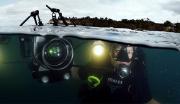
Members of SEALS Delivery Vehicle Team Two huddle together inside a flooded Dry Deck Shelter mounted on the back of the Los Angeles-class attack submarine USS Philadelphia. Dry Deck Shelters (DDSs) provide specially configured submarines with a greater capability of deploying Special Operations Forces (SOFs). DDSs can transport, deploy, and recover SOF teams from Combat Rubber Raiding Craft (CRRC) or SEAL Delivery Vehicles (SDVs), all while remaining submerged.
Special Operations
Job Overview:
Special Warfare and Special Operations Officers lead some of the most strategic, secretive, and dangerous missions in the Navy. They must coordinate the flawless team effort, needed in virtually every environment, in order to accomplish each mission.
Pay:
Job Description:
To some people, comfort is a warm spot under the covers. To Special Warfare and Special Operations Officers, it’s parachuting 500 feet into the frigid ocean, overseeing the disposal of an ocean-borne mine, traveling silently underwater in a SEAL Delivery Vehicle, or scurrying through a dense jungle in a combat situation. Only the most physically fit, strategically thinking team players qualify to orchestrate operations among this elite community. SEAL and Special Operations Officers are the experts and leaders in unconventional warfare. They quietly and efficiently destroy enemy targets, recover and dispose of explosives, and collect information on enemy operations.
What Will You Do?
As an Officer in the SEAL or Special Operations community, you may be called upon at a moment’s notice to perform covert reconnaissance missions, conduct antiterrorist missions, clear land mines in the far corners of the globe, or even train dolphins to utilize their sonar capabilities. SEAL and Special Operations Officers may be trained to jump from airplanes with high-altitude parachutes or operate stealthy watercraft, inflatable boats, or scuba gear. As an Officer in Special Warfare or Special Operations, you might:
- Perform underwater location and identification of foreign and domestic ordnance, as well as rending safe, disposing of, or recovering ordnance
- Assist the United States Secret Service in protecting dignitaries
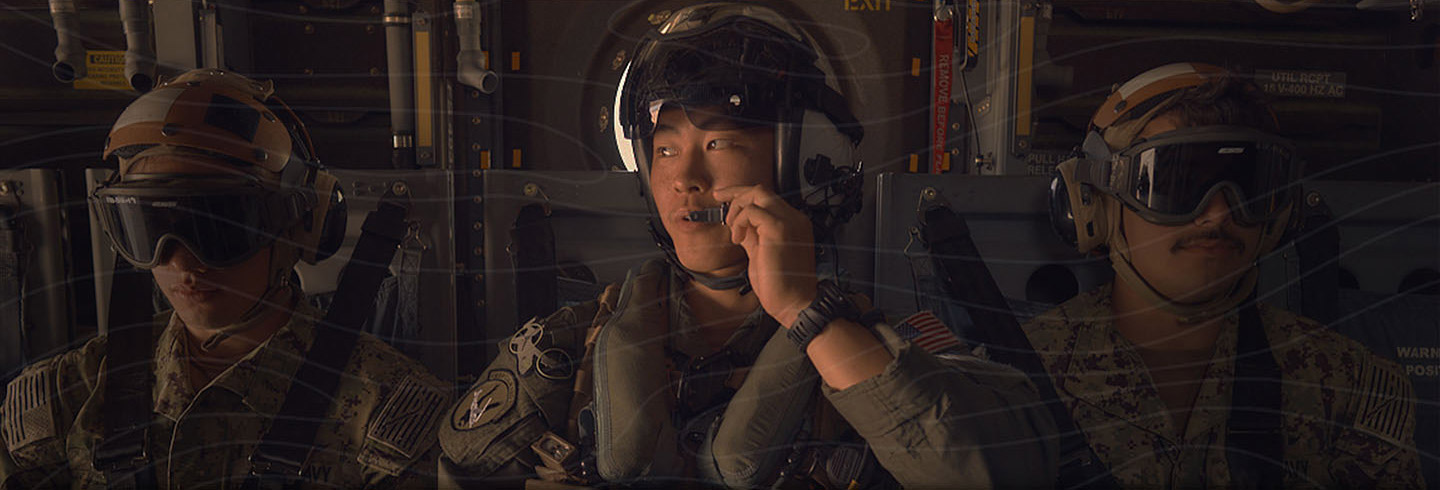
- Direct and perform parachute/helicopter insertions
- Collect information about enemy military installations in coastal areas
- Conduct reconnaissance and demolition of natural or man-made underwater obstacles prior to amphibious landings
- Conduct and carry out demolition and other direct-action raids against military targets
Earn While You Learn
You might learn the fundamentals of explosive ordnance disposal through formal Navy schooling. Or you may learn about chemical/biological warfare, military tactics, deep-sea diving, or a number of other tactical military procedures.
The courses in this field are demanding, but individuals who accept these challenges are rewarded with extra pay and extraordinary duty assignments.
Special Pay/Bonuses
SEAL Officers receive normal pay and allowances, plus incentive pay for special skills and assignments, such as $175/month dive pay, $300/month SDV pay, $225/month HALO (jump) pay, $110/month special duty assignment pay, and $50–100 a month for second-language proficiency. Special Operations Officers assigned to diving duty are eligible to receive dive pay. Demolition Duty Pay is payable to Officers working with explosives and demolitions during training.
Training/Commissioning
To become a Special Warfare (SEAL) Officer, a candidate must meet the physical prerequisites, volunteer for hazardous duty, and report to Basic Underwater Demolition/SEAL (BUD/S) training after gaining a commission as a Navy Officer. BUD/S Training is a seven-month course that is specifically designed to provide the necessary basic physical, mental, and technical skills needed by a Special Warfare operator and its requirements are demanding enough that only those who are highly motivated will complete the course.
BUD/S Phases are as follows:
- Indoctrination: Gives students an introduction to required BUD/S techniques and performances
- First Phase (Basic Conditioning): Includes continuous physical conditioning. Students also study small boat seamanship and hydrographic surveys and charts
- Second Phase (Diving): Covers SCUBA skills. Students learn open- and closed-circuit combat diving and how to complete long-distance underwater transit dives
- Third Phase (Land Warfare): Includes land navigation, small-unit tactics, rappelling, military land and underwater explosives, and weapons training
- Post-BUD/S Training: BUD/S graduates attend several more courses before they are assigned to a team:
- Basic parachute training at Army Airborne School
- Special Operations Technicians training at the Naval Special Warfare Center
- Diving medicine and medical skills training in the Special Operations Medical Sergeant Course (for those with a medical rating)
Once all courses are completed, graduates are assigned to a SEALS or Special Delivery Vehicle (SDV) Team for six to 12 months of on-the-job training. Successful candidates are awarded a SEAL designation and the SEAL Trident.
Advanced SEAL Training
Training, physical conditioning, and drills are part of the SEAL lifestyle. Once you’ve received SEAL classification, you can go even further with advanced training that could include sniper school, dive supervisor, language training, SEAL tactical communications, and more.
Special Operations (SPECOPS) Officers Training
The Special Operations Officer training pipeline is determined by whether the officer is being assigned to Diving Operations or the Explosive Ordnance Disposal.
Career Outlook
Although the Officer careers in Special Warfare and Special Operations have few civilian counterparts outside of medical emergency and law enforcement, the leadership, tenacity, and combat strategy skills you will acquire are highly respected by any employer.
LT Lon Olson